logo
メッセージを送る

Differences Between Ferroalloy Refining Furnaces and Ladle Refining Furnaces

November 19, 2025

最新の会社ニュース Differences Between Ferroalloy Refining Furnaces and Ladle Refining Furnaces

Differences Between Ferroalloy Refining Furnaces and Ladle Refining Furnaces

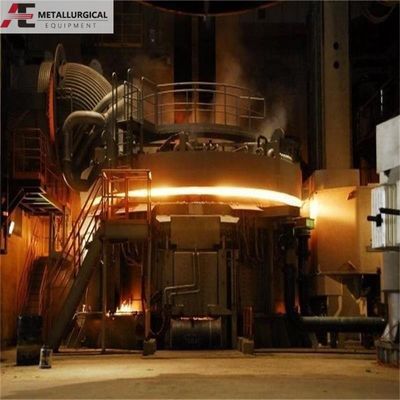
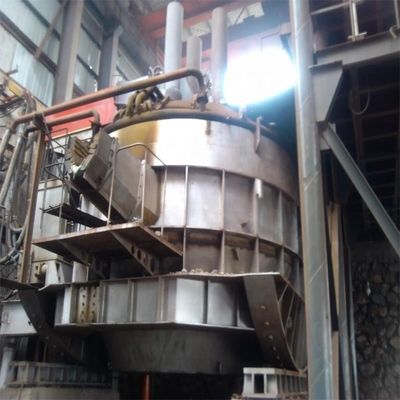
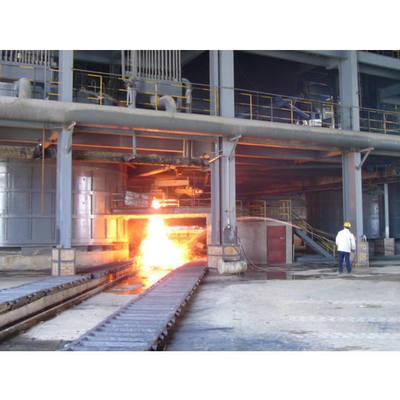
Within metallurgical processes, both Ferroalloy Refining Furnaces and Ladle Refining Furnaces (LRFs) serve as crucial equipment for refining, yet they differ significantly in their technological purposes, operational principles, and application domains.

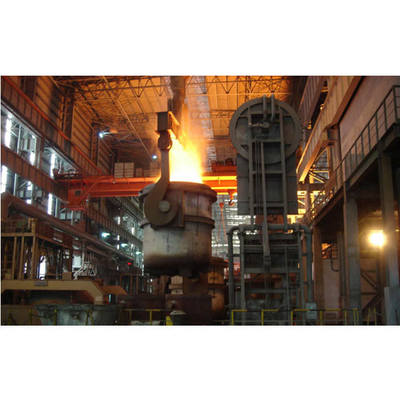
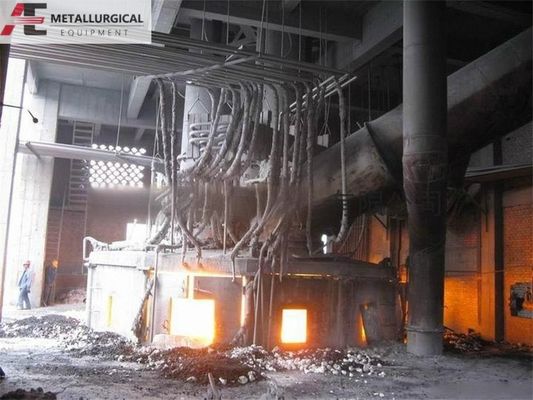
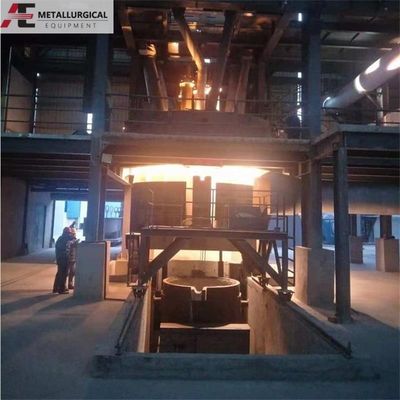
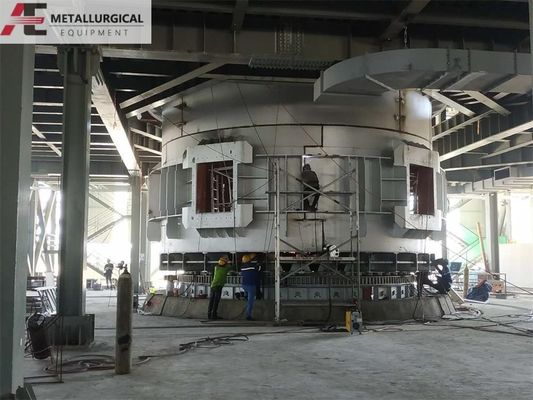
最新の会社ニュース Differences Between Ferroalloy Refining Furnaces and Ladle Refining Furnaces  0

1. Technological Purpose and Final Product

  Ferroalloy Refining Furnace (Electric Arc Furnace Type):
    Its primary objective is the refining of ores, high-silicon low-carbon ferroalloy remelt products, and fluxes. The core process involves desiliconization to produce medium-carbon, low-carbon, and micro-carbon ferroalloys. It is fundamentally a production unit for specific ferroalloy products. The production is characterized by a batch (intermittent) process involving cyclical charging of raw materials and tapping of the final alloy.

  Ladle Refining Furnace (LRF):
    It is designed to refine molten steel from primary furnaces (such as Electric Arc Furnaces, Basic Oxygen Furnaces, or Open Hearths). Its main functions are secondary refining, temperature control, and acting as a process buffer to coordinate between steelmaking and continuous casting/rolling. The LRF is not a melting unit but a key secondary or external refining installation. It handles molten steel to achieve precise composition, temperature, and cleanliness.

2. Process and Operational Characteristics

  Ferroalloy Refining Furnace:
      Process: Focuses on slag-metal reactions for oxidization removal (mainly silicon). It operates in distinct batches.
      Furnace Types: Commonly includes open-top, covered, and semi-enclosed types with low fume hoods. The furnace body can be fixed, tilting, or rotating.
      Key Systems: Consists of the furnace shell, roof/hood, electrode system, charging system, hydraulic system, and water-cooling system.

  Ladle Refining Furnace:
      Process: Integrates multiple advanced refining functions in a single station:
        1.  Arc Heating & Temperature Management: Enables reheating and temperature homogenization of molten steel, allowing for alloy additions, composition trimming, slag condition adjustment, deep desulfurization, and deoxidation.
        2.  Inert Gas Stirring: Typically uses Argon injected through porous plugs at the ladle bottom to homogenize temperature and composition, promote slag-metal reactions, and remove inclusions.
        3.  Vacuum Degassing: Often combined as LF-VD or similar. The ladle is placed under a vacuum cover, and gases like hydrogen and nitrogen are removed via vacuum pumps (e.g., steam ejectors), often enhanced by argon stirring for further deoxygenation and desulfurization.
      Key Systems: Includes the ladle (acting as the furnace body), a movable roof with electrodes (for heating), argon stirring system, vacuum system (if equipped), alloy/additive feeding system, and sophisticated process control systems.

3. Application and Role in Production Flow

  Ferroalloy Refining Furnace: Serves as the primary production core within ferroalloy plants. Its product is the finished ferroalloy, which is then used as an additive in steelmaking.
  Ladle Refining Furnace: Serves as a pivotal buffer and refining station within steel plants, located between primary steelmaking and continuous casting. Its primary benefits to an integrated plant include:
      Accelerating the overall production rhythm by decoupling primary melting from refining/casting requirements.
      Improving metallurgical efficiency and product quality (cleanliness, homogeneity, precise composition).
      Ensuring optimal, stable temperature for continuous casting, enhancing slab quality.

4. Operational Safety Focus

Standard operating procedures for an LRF highlight critical safety aspects distinct from a primary ferroalloy furnace, such as:
  Strict pre-operation checks for ladle car interlocks, travel switches, and all mechanical/auxiliary systems (vacuum, gas, heating, feeding).
  Rigorous high-voltage electrical safety protocols during electrode handling and power transmission.
  Specific procedures for vacuum operation, oxygen blowing (requiring oil-free gloves), and argon stirring.
  Mandatory isolation (key lock-out) and clearance procedures during maintenance on elevated structures like the heating gantry.

Summary Comparison Table:

最新の会社ニュース Differences Between Ferroalloy Refining Furnaces and Ladle Refining Furnaces  1

In conclusion, while both involve "refining," the Ferroalloy Refining Furnace is a primary smelting/refining unit for alloy production, whereas the Ladle Refining Furnace is a sophisticated post-treatment unit designed to elevate the quality, precision, and efficiency of steel production.

We are a professional electric furnace manufacturer. For further inquiries, or if you require submerged arc furnaces, electric arc furnaces, ladle refining furnaces, or other melting equipment, please do not hesitate to contact us at  Susan@aeaxa.com  


私達と連絡を取ってください
コンタクトパーソン : Miss. Susan
電話番号 : +86-13991372145
残りの文字数(20/3000)